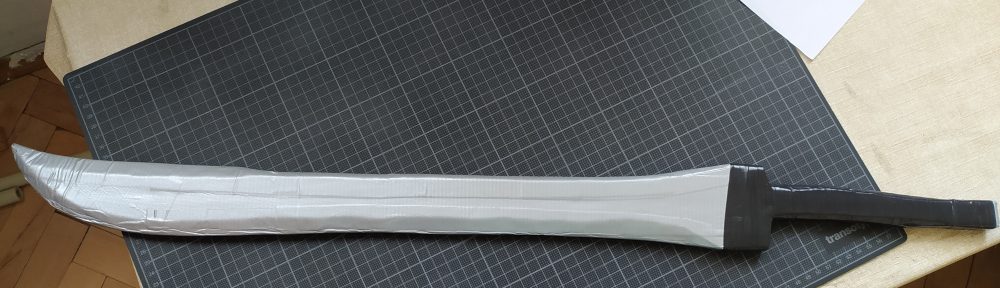
A second version of an already made sword.
Idea: side sword, single edge, curved at the end (reference image below), training sword (duct tape finish)
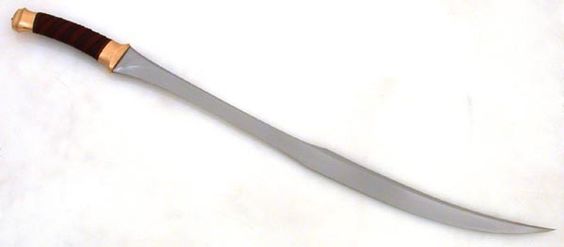
Reference notes – curvature in the top third of the blade, curvature of the grip, no guard, no large pommel, grip length – standard for side sword
That was my first sword with glass fiber core and EVA foam. The result was encouraging.
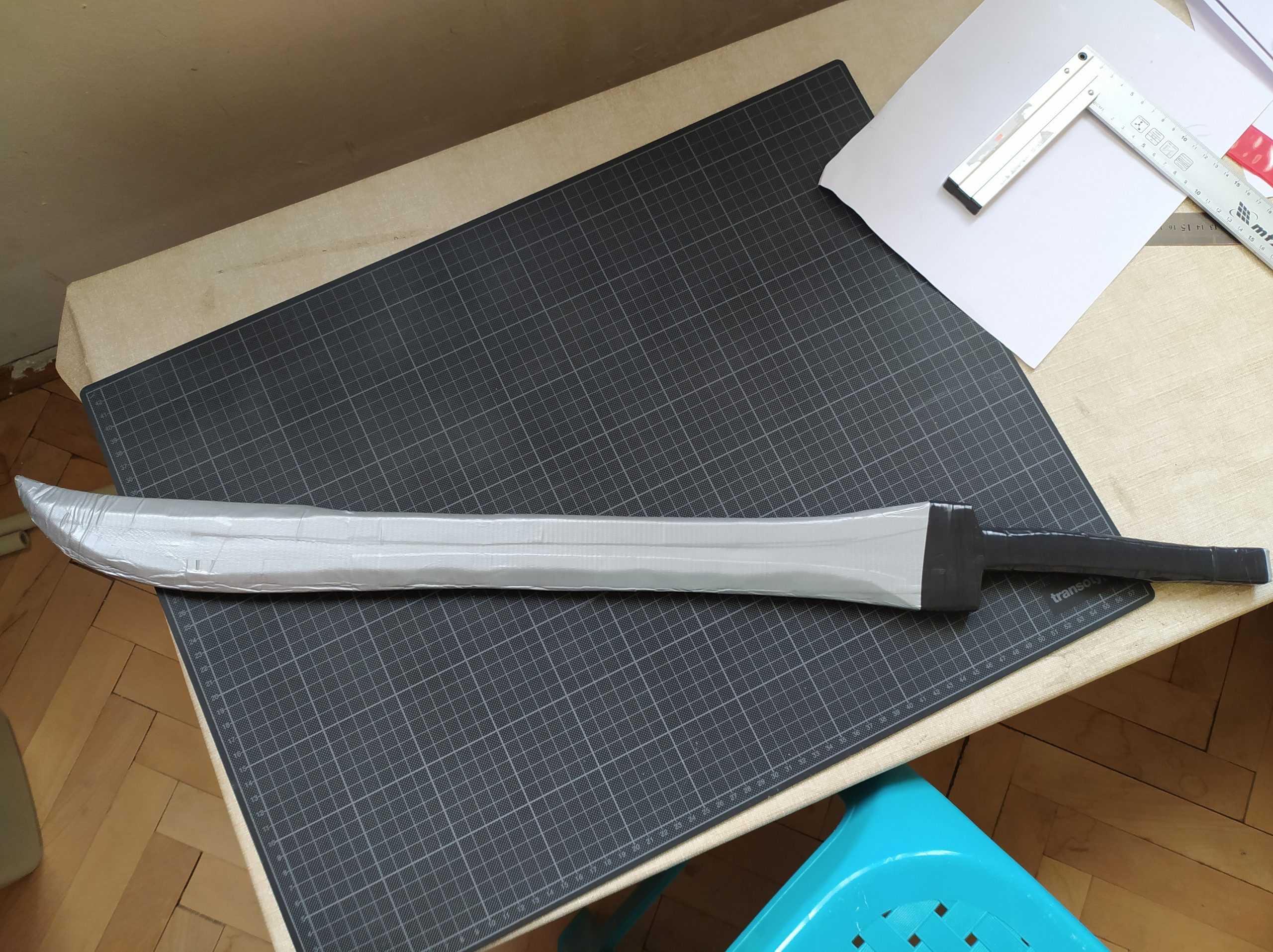
Feedback from the first battle test:
- Preference – Should be a bit longer (~5cm)
- Preference – The grip should be wider (~1cm).
- Preference – The widening at the back before the tip should be removed, along with the false edge.
- Problem – the end of the grip (where the not-pronounced pommel is) suffers a bit – the sword is generally used with one hand, but the second hand does help from time to time and the end of the grip is not supported (the core does not extend all the way). May be this should addressed.
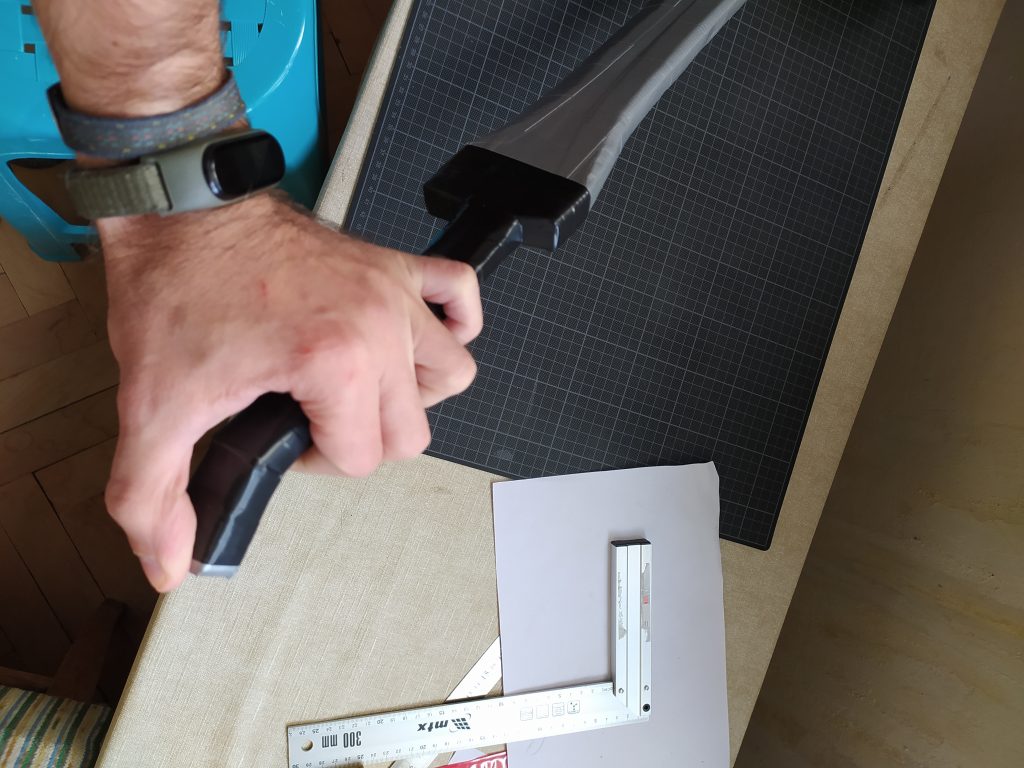
- Problem – As the layering at the moment is 3 + 10 + 3mm, the boundaries between the closing 3mm later and the main 10mm layer are prone to heavier tear (see below). I’ll try another layering later on, but for now I’m stuck with this. Clearly this works only for training weapons (duct tape finish). For spray-and-paint weapons I’ll have to revert to two-layered pattern (the way most people do it on the net, see Resources).
- Hidden problem – by mistake the weapon is actually made out of two parts – the blade and the grip were separate and currently being held together by elaborate pattern of electrical tape ‘wiring’. I’m waiting to see how long it will take for the sword to break apart during training at the grip. It is quite a light sword, with good balance even without weighting, so the sword may live longer that I initially anticipated, but… we’ll see.
- Problem – the core of the weapon is a 9.5mm rod, while the main foam layer is 10mm. I did forget to compensate that, so you can feel that there is a hidden groove in the blade. This means that the glue does not pull it’s weight and the blade is prone to dismantling.