
I like primes. Particularly, among other things, I like the idea of them being building blocks for other numbers.
The problem comes from intuition mismatch – the operation that combines primes into numbers is multiplication, not addition. Admittedly, we are used to create by adding, not multiplying. Even more, we consider (and I can not think of a reason not to) that multiplication is a second order operation – an upgrade to addition.
So… I frequently turn the idea over in my head, trying to crack it and find a way to stuff it all in my intuition engine, so I don’t have to rationalize and accept it.
And a few days ago I had a kind of a break through. I can’t say that it’s something grand, but it’s a step in the right direction.
Prerequisite:
Since we are talking about prime numbers, we are working only in the realm of integers. So try to imagine the mathematical universe as a discrete place with a grid with granularity of 1. E.g. the smallest possible measurement is 1. or 1×1 in 2 dimensions, 1×1×1 in 3 dimensions and so on.
Then:
Consider the number 6.
On the normal number scale it represents a point on the mark 6 on the positive integer axis:
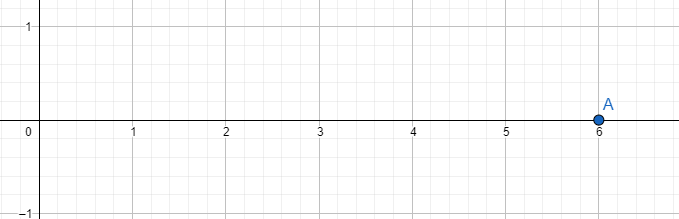
This is the same as the distance between the point of number 0 and the point of number 6 on the integer axis. Like this:

In the discrete integer space it looks like this:
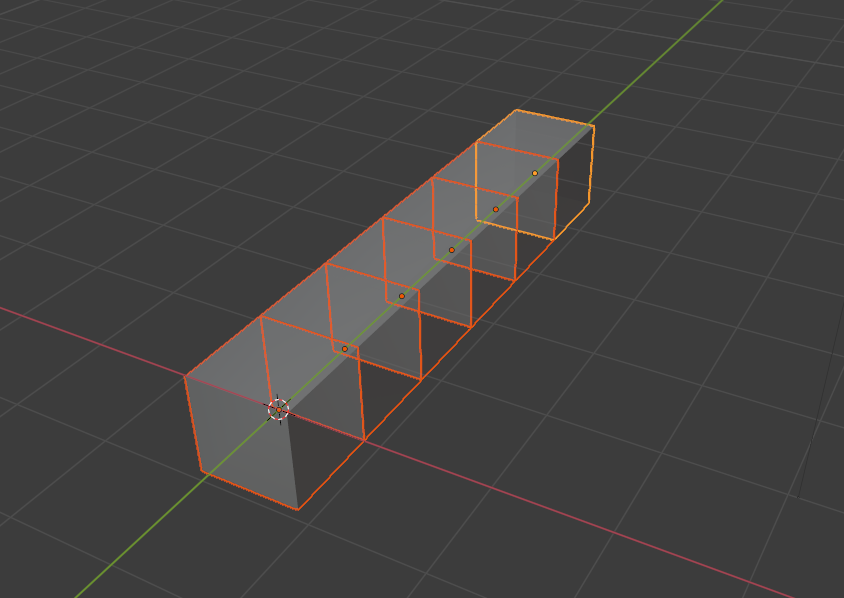
The same, just showing the discreteness. This representation, going forward, is called the integer object of the integer 6.
Let’s double it to a 12. Six would also do, but 12 gives a bit more options. So:
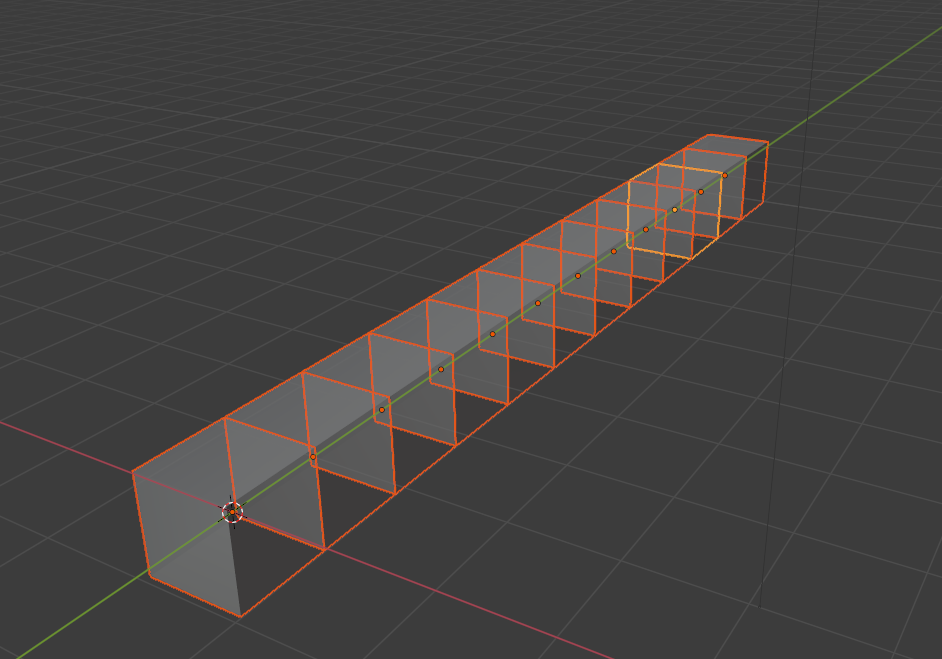
All fine and dandy, so far. 12 units laying on the X axis.
But we know we can represent 12 is a composite number – it has a prime factorization that includes more numbers than 12 and 1.
We can represent 12 as 6 times 2. Which, in a discrete geometrical sense, would mean extending the one dimensional integer 12 into 2 dimensions, creating an object of shape 6×2.

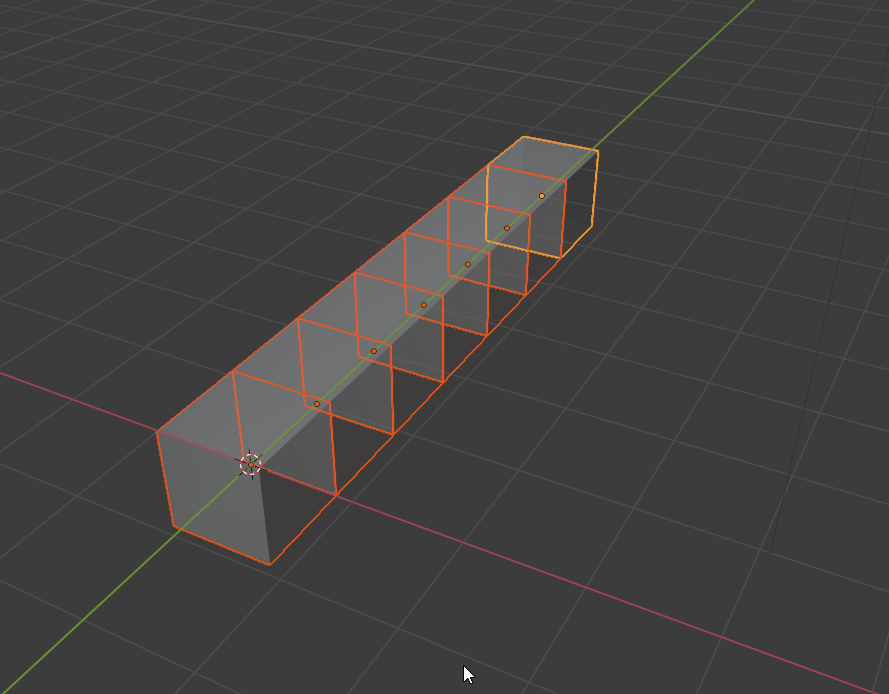
The reason I chose 12 is, of course, because its prime factorization is 2×2×3, e.g. it has 3 prime factors, so we can bring it up another dimension:
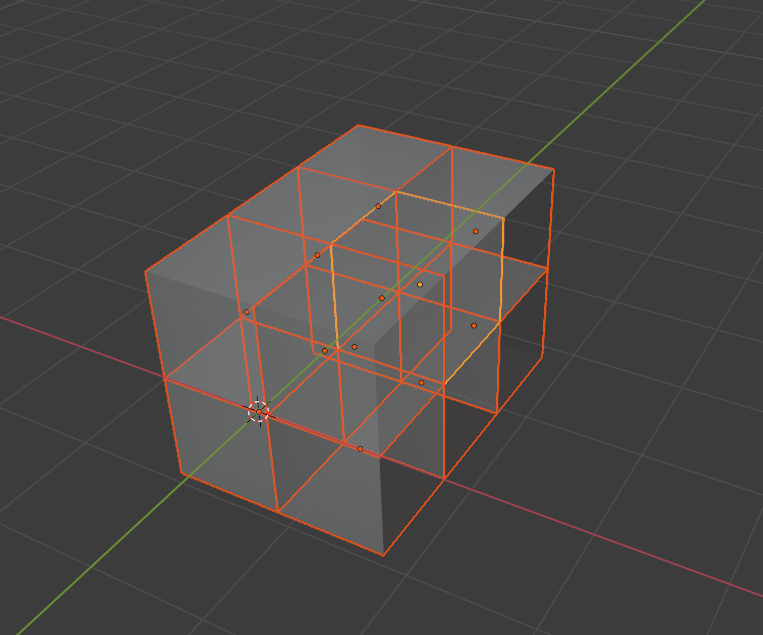
That’s the head of the idea that I had – that if you take the prime factors of an integer to be the size of an object in as many dimensions as there are prime factors, the compositeness of a number is very easy to grasp.
The important consequences of this representation (or what is this all about):
- 12 is 2×2×3 – there are two prime factors that are the same (2). This means that one of the cross sections of the object is a square. Not that it helps anything, but I thing it deserves mentioning.
-
- Extending this would tell us that if we have n equal prime factors, there will be a cross section of the integer object that is an n-cube (if that is the proper term). Example: 24 is 2×2×2×3, so it can be constructed as a cube with side 2, extended in the fourth dimension to a length of 3.
-
- So far so good. The next consequence is that an integer has a number of integer object representations – they equal the number of unique factorizations (mirrors exluded as not bringing any information to the table). Each representation, to be constructed, needs a number of dimensions, equal to the number of factors (in 2 dimension we can represent 12 sa 1×12, 2×6, 3×4).
- Third – each object’s prime integer object representation has a minimum number of dimensions needed for it’s integer object to be constructed and that number equals the number of prime factors we constructed the integer from (for 12 we need 3 dimensions – for measures of 2, 2 and 3).
- Importnant – The number of prime factors of an integer determines the maximum number of dimensions we can meaningfully construct it in. For the integer 12, all dimensions above 3 do not bring any new information. Adding new dimensions after that will not change the relationship of the integer object to the space, as the shape itself can not have more dimensions. Meaning that in 4 dimensions, the 12 object will be a 3 dimensional object with a nominal 1 as it’s fourth measure.
- And lastly – what is actually the heart of the idea – primes need only 1 dimension to exist. You can construct the integer object of a prime in a space with any number of dimensions, but only one of them will carry the information about the prime. All the rest will be nominal!
However many dimension you put 7 in, it will always be a line with length 7 – the most simple possible object with that size. In any number of dimensions (larger than 0) a prime number stays a line!
That is what I found fascinating!
And it comes back to the building blocks when you consider how the integer objects are created – one prime integer object aligned with the positive axis of each dimension of your space, all beginning at the origin.

Well… It turns out that even though the integers, as we usually think of them, are a single dimensional concepts, consisting of only a magnitude, but if you want to know how they are built – they are actually multidimensional objects. And for most of the integers those object representations have more dimensions that we are usually comfortable imagining.
P.S. Of course I could have done it with just lines and normal objects, instead of building it all out of blocks. But I think this way the discreteness is obvious at all times and in all representations and I find that to be the most important building block of the idea.